
One question I get asked often is how I taught my kids to read so well at three years old. Exposure to books was the first step. I read to them all the time and we built a love for story time together. Here is a video of my daughter reading a third grade book when she was four years old.
I started reading books to them when they were newborns. When my kids were a year old, they were “reading” to me and to each other. Their version of reading at that point was holding a book (sometimes upside down) and saying made up words. Seeing them imitate the act of reading was an indicator that they were internalizing story time. This was the start of our reading journey.
At one, my daughter had picked up important pre-reading skills: how to hold the book, that the pages need to be turned, when you read you’re supposed to point and talk. This was not something I explicitly taught her, she learned these things through observation.
What can you do during story time?
Read Often: Try to read at least one book everyday or as often as you can. If you can’t fit it in during the day, make it a part of your bedtime routine. Don’t worry if you have a small amount of books in your home. We have read some of our books a hundred times (repetition is good). Reading the same book over and over again, makes imitating reading easier for your child.
Make Reading Time Special: Turn on twinkly lights in the room, make a reading nook, cozy up in bed, put them on your lap, act out the story together. Make it a time to look forward to, a time where you focus on each other and a book.
Model Reading: Hold the book upright and point to each word as you read it. Read with intonation and inflection to keep it interesting. Change your accent, your pitch, take a long pause, these all help bring the story to life. You’ll get a kick out of watching them “read” the book with the same amount of passion you gave.
Connect the Pictures to the Words on the Page: After you read a page, take time to look at the picture and talk about it. Let them take it all in. If they show interest in a picture, talk about the picture. If you read the word dog, point to the dog in the picture, say dog, and make a barking sound. This helps build vocabulary and teaches them that the words and pictures are connected. When you reread the story, ask ‘Where is the dog?’ and see if they can point to it. Pointing is a nonverbal cue your little one can use to show understanding.
Talk About the Parts of a Book: When they are very young, just read the title, author, and illustrator before you begin reading. When your child is old enough to understand, discuss the cover page, what the author and illustrator do, the dedication page, the table of contents, the page numbers, the index, etc. This gives your little one an understanding of all the different elements of a book. You can also talk about how to take care of books: how to turn the pages, how to put the book back on the shelf with the spine facing out, etc. The Shelf Elf is a really cute book about how to take care of books.
Read a Variety of Books: Nursery rhyme books, singing books, picture books, fiction, non-fiction, etc. The key is to expose them to different types of books so they get a broader exposure to language, vocabulary, pictures, photos, etc. This also keeps it exciting. My kids loved pop-up books and singing books. Here is a video of my daughter “reading” a song book to her younger brother.
Song books are great at helping kids remember the words in the story. She also used the pictures as clues to know what part of the song to sing next.
This is how our reading journey started. We read together. ALOT. Once they were ready, we started working on the alphabet and letter names/sounds through songs and games, something I cover in part two of this blog.
Once they knew the alphabet and most of the letter names/sounds, I explicitly taught them how to sound out words and blend them using sight words and cvc (consonant vowel consonant) words: I cover this in part three of this blog. At the same time they were learning how to read, I was teaching them how to write, starting with drawing simple pictures, which I discuss in this blog: Teaching Your Little One to Write.
What if I don’t have enough books at home?
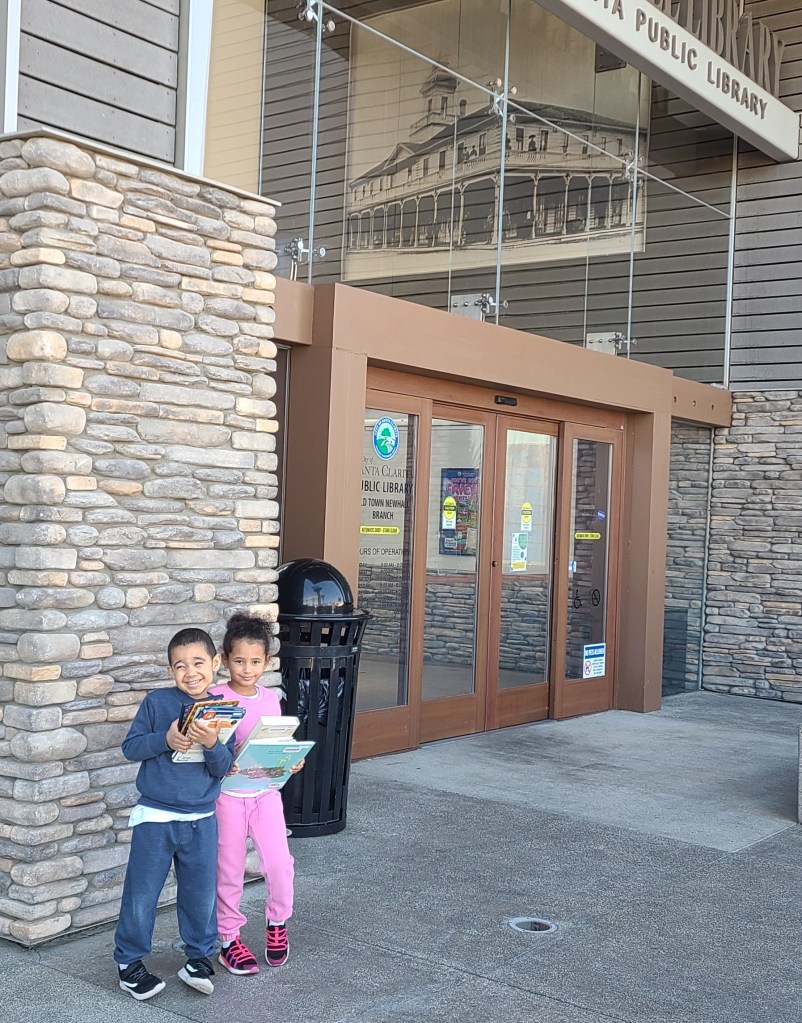
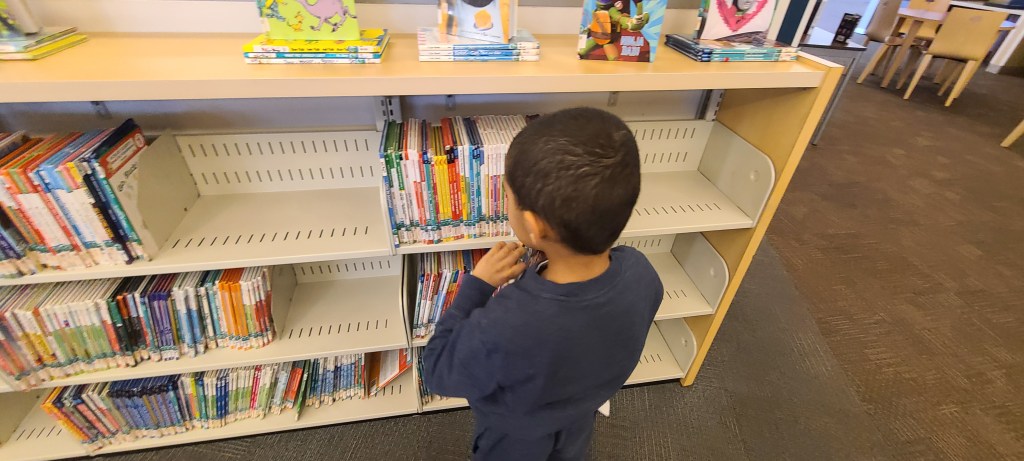
If you do not have a large assortment of books at home, get a library card from your local library. Getting a library card is free. You can apply for one at the help desk of your local library or you can apply online. I applied for one in person. The librarian asked for a photo id and my phone number. My kids got their own library cards as well! I just provided their names and their information was linked with mine. The process only took about three minutes.
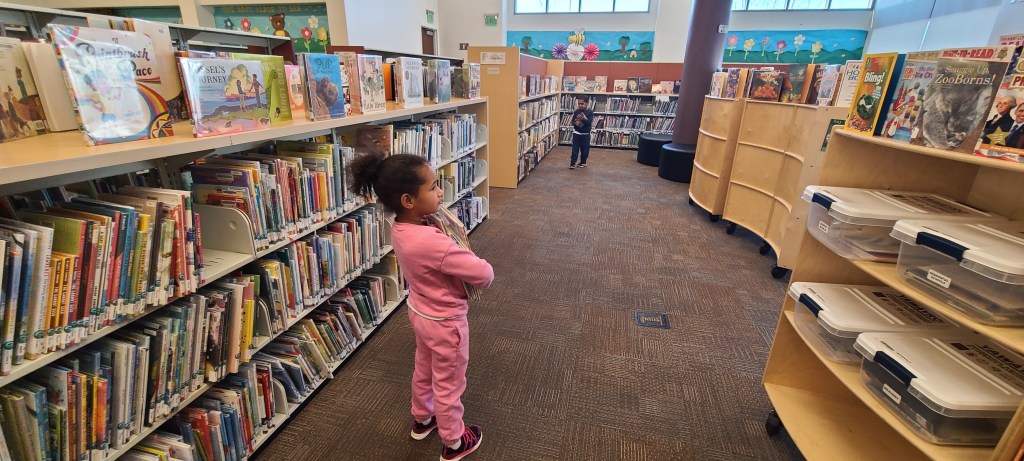
We take field trips to the library to restock our reading materials whenever needed. You are allowed to check out fifty books at a time, which is great. Plus, there are tons of online books as well through the library app.
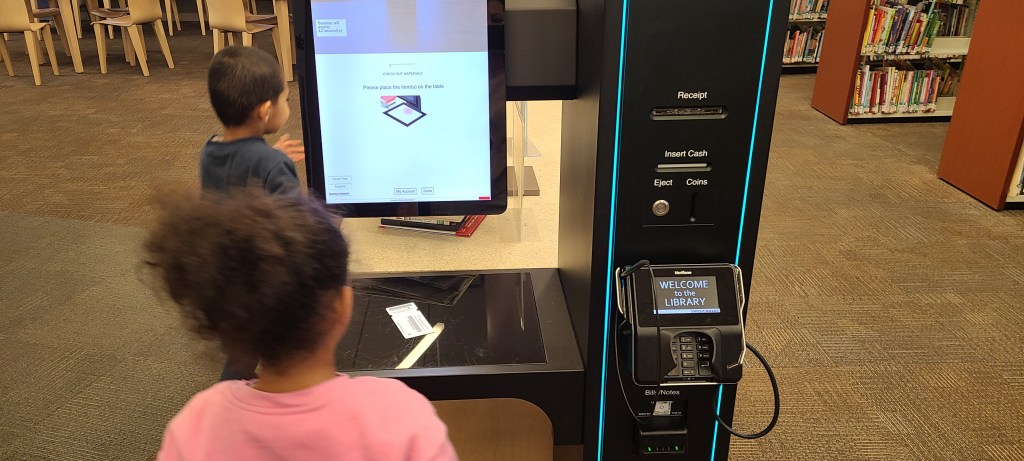
My kids love taking their wallet with their library card in it anytime we go. Once we pick all of our books, they scan their card on the check out machine and check out the books themselves.
The most important thing is to keep reading and have fun! Keep the conversations flowing by letting your kids take the lead on what catches their interest. Expose them to as many books as possible. The benefits to reading at an early age are endless and story time helps create great memories.
If you’re already reading with your little one and are ready to take the next step, read part two to four of this blog: Part two focuses on the alphabet, letter names, and sounds. Part three dives into the actual act of reading: blending sounds together to make words. Part four provides a list of tips and tricks for blending trickier words!
 Peachy Teachy
Leave a comment